Why Kids Ask "Why" So Much: The Science Behind the Endless Questions
Why kids ask "why" so much
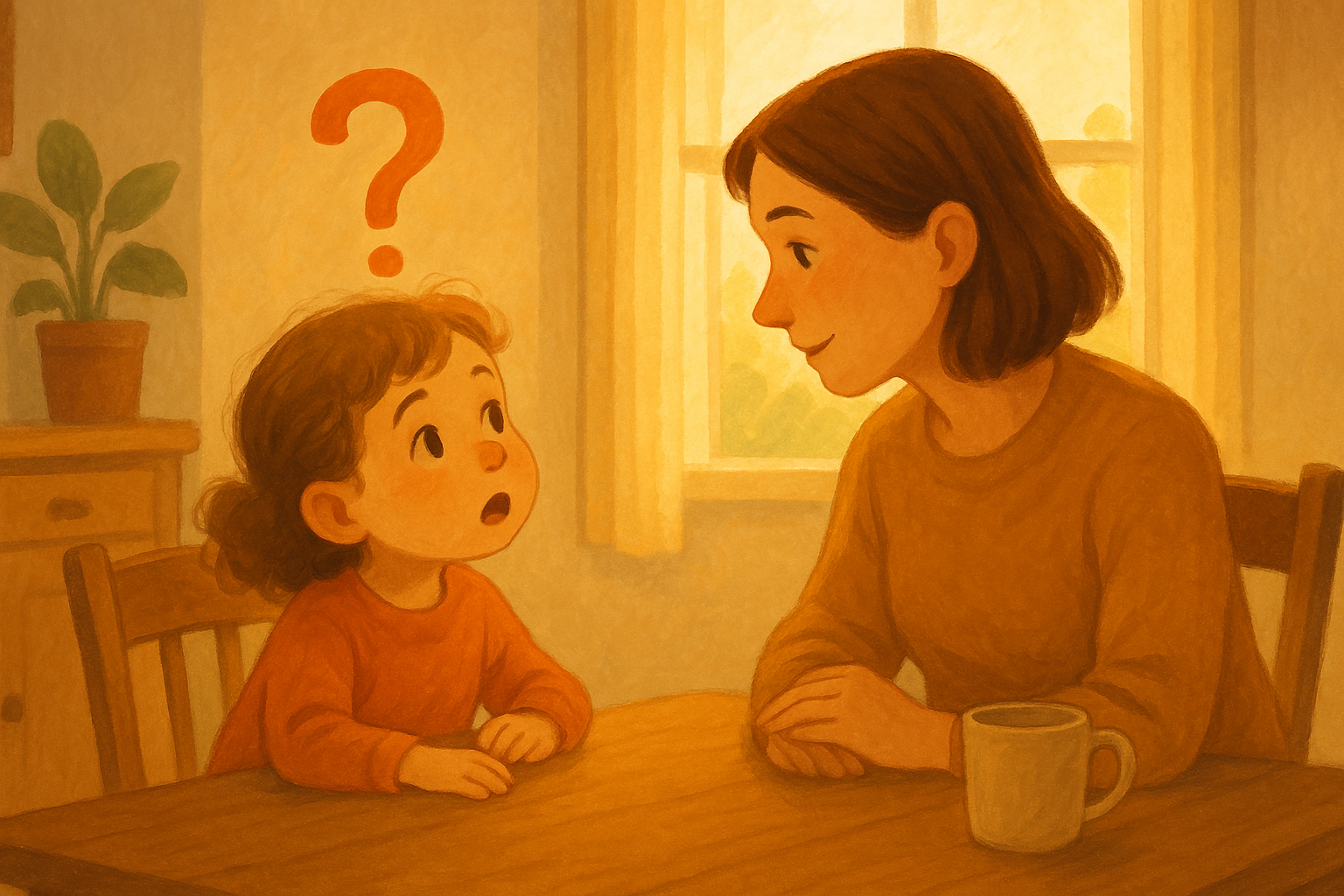
At some point—often around preschool age—it begins. You explain why shoes go on before we leave. Your child nods thoughtfully, then asks: "Why?" You answer again. Another pause. Another "Why?" By the fifth round, you may feel tested, tender, or secretly worried you’re missing something important.
Here’s the reassuring truth: when kids ask "why" so much, it’s a sign that their brains are doing exactly what they’re supposed to do. This isn’t defiance, manipulation, or an attempt to wear you down. It’s learning in motion.
Let’s look at what’s really happening—and how to respond in ways that protect both your child’s curiosity and your own energy.
The curiosity hook: "Why" is a learning engine
Adults often think of learning as absorbing information. For children, learning works differently. It’s driven by active questioning.
"Why" is the verbal version of a toddler reaching out to touch something new. It’s how children:
- Test how the world works
- Check if explanations stay consistent
- Learn cause and effect
- Practice conversation and reasoning
In brain terms, asking "why" lights up pathways connected to reasoning, language, and prediction. Your child isn’t just asking for facts—they’re building a mental map of reality.
The science behind the endless "why"
Young children’s brains are wired to seek patterns. Around ages 3–7 especially, kids enter a phase psychologists sometimes call intuitive science. They’re constantly forming mini-theories:
- If I jump, I fall.
- If I cry, someone comes.
- If it’s dark, things feel scary.
When your child asks "why," they’re checking their theories against yours.
And here’s a key detail: their working memory is still developing. That means even if you gave a great answer two minutes ago, their brain may not hold onto it yet. So they ask again—not because they forgot you answered, but because repeating the question helps the idea stick.
This repetition is not a bug. It’s a feature.
The age-progression guide: how "why" changes from 3 to 12
Understanding what "why" means at different ages can take a lot of pressure off.
Ages 3–4:
- "Why" often just means "Keep talking to me."
- They’re practicing language and connection.
- Answers don’t need to be long or technical.
Ages 5–7:
- "Why" becomes more logical.
- Kids want causes, rules, and fairness.
- This is peak "why" frequency for many families.
Ages 8–10:
- Questions get more specific.
- Kids start noticing contradictions in adult answers.
- They may ask follow-ups instead of repeating "why."
Ages 11–12:
- "Why" often turns inward: "Why do people act like that?"
- Questions become philosophical or moral.
If your preschooler sounds like a broken record, that doesn’t mean they’ll interrogate you forever. The questioning evolves.
The emotional lens: sometimes "why" isn’t about information
Not every "why" is a science question.
Sometimes "why" really means:
- "Is this safe?"
- "Can I trust this rule?"
- "Are you paying attention to me?"
For example, when a child asks, "Why do I have to go to bed?" the emotional question underneath might be about separation, missing out, or wanting control—not sleep science.
When answers don’t seem to satisfy, it can help to respond to the feeling instead of the logic.
The script: a parent-ready response that works
You don’t have to answer every "why" like a textbook. In fact, simple responses are often better.
"That’s a good question. What do you think?"
This does three powerful things:
- It shows respect for your child’s thinking
- It reveals what they already understand
- It turns questioning into a shared conversation
If you’re tired or overstimulated, another honest script works too:
"I’ve answered a lot of whys today. Let’s pause and talk more later."
Setting boundaries doesn’t shut down curiosity—it models self-awareness.
The common parent pitfall: over-explaining
Many parents feel pressure to give perfect answers. But long explanations can actually overwhelm young kids.
If your child keeps asking "why" after a detailed response, it may not mean they need more information. They may need simpler information.
A good rule of thumb:
- Answer in one or two sentences
- Stop before you feel clever
- Let them ask the next question
Curiosity works best in small bites.
The misunderstanding check: when "why" feels like defiance
Sometimes "why" comes right after a limit:
- "Why can’t I have another cookie?"
- "Why do I have to turn it off now?"
In these moments, "why" can sound like a challenge. Developmentally, it’s often a processing delay. Kids need help bridging from desire to disappointment.
A gentle correction sounds like:
"You’re disappointed. The answer is still no, and I can stay with you while you’re upset."
You don’t have to debate the boundary to honor the feeling.
The real-world tie-in: curiosity predicts learning
Research consistently shows that children who ask more questions:
- Retain information longer
- Develop stronger reasoning skills
- Feel more confident engaging with adults
Even when it’s exhausting, your child’s "why" phase is laying groundwork for future learning, problem-solving, and communication.
That doesn’t mean you have to enjoy every moment of it—but it does mean the effort matters.
A gentle reframe for tired parents
When you hear the tenth "why" of the morning, try this quiet mental shift:
This isn’t a test. It’s a practice.
Your child is practicing being human in a complicated world. You’re practicing being their guide.
And if some days the answer is simply, "I don’t know," that’s okay too. Wondering together is sometimes the most powerful response of all.
Why kids ask "why" so much—and why that’s a good thing
So if you’re living with a small philosopher who questions everything from gravity to grocery rules, take heart. When kids ask "why" so much, it means their minds are awake, engaged, and reaching outward.
You don’t have to answer every question perfectly. You just have to stay curious alongside them—and remember that this phase, like all the others, is doing important work.
Start explaining the world today
Join thousands of parents who use Little Answers to turn 'Why?' into a moment of connection.