How to Talk to Kids About Being Scared of the Dark (Without Dismissing Their Feelings)
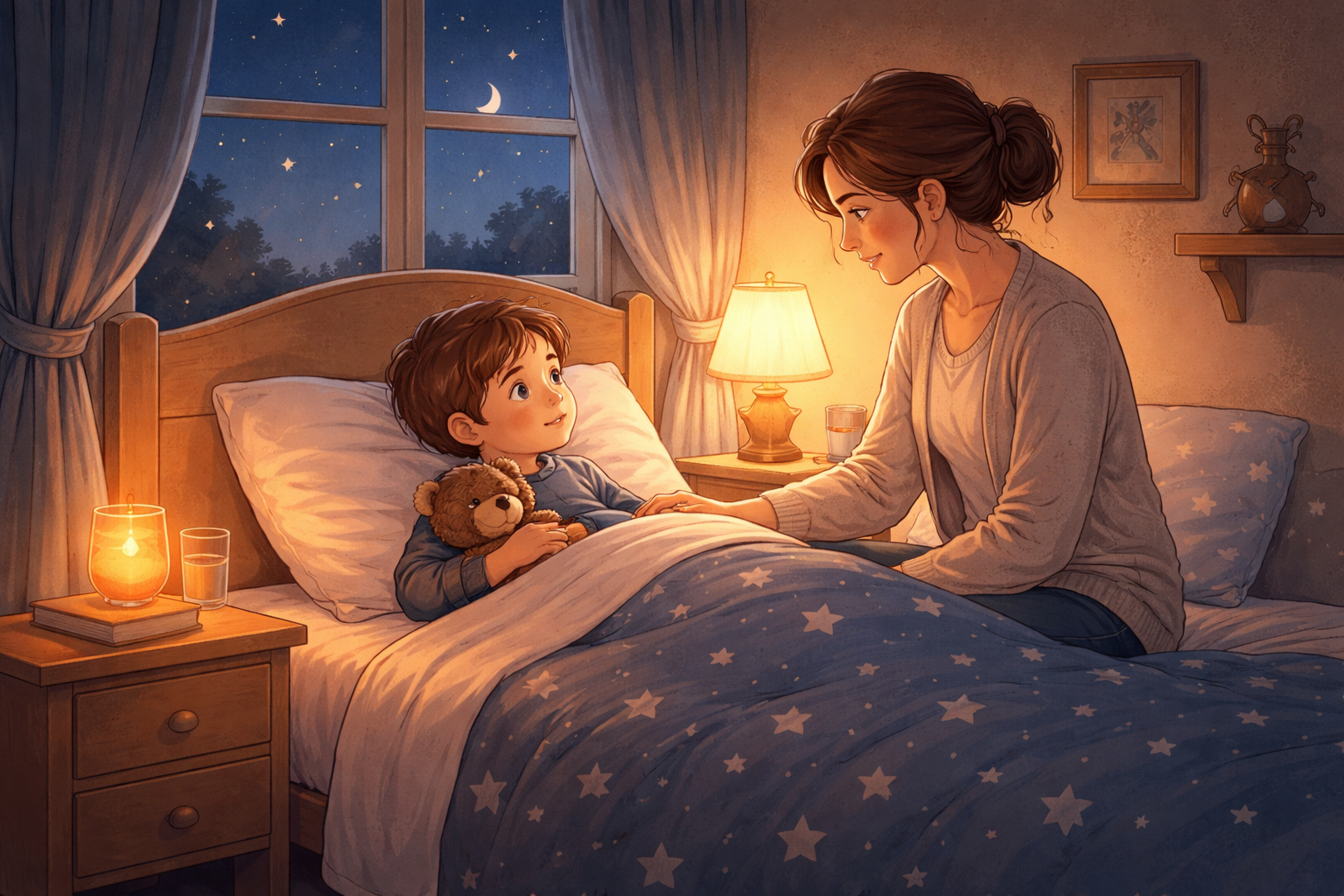
How to talk to kids about being scared of the dark
Fear of the dark often arrives quietly. Bedtime stretches a little longer. Requests for extra water multiply. A small voice asks, “Can you stay?” When parents search for how to talk to kids about being scared of the dark, what they’re really asking is how to help their child feel safe—without pretending the fear is silly or feeding it more fuel.
The good news: this fear is developmentally normal, deeply human, and very teachable. With the right language and a few thoughtful rituals, nighttime can become a place of calm rather than tension.
Why the dark feels so real to kids
Darkness removes information. For a child’s brain—especially between ages 3 and 7—missing information often gets filled in with imagination. This isn’t misbehavior or drama; it’s the brain doing its job a little too creatively.
There’s also a protective instinct at work. Humans evolved to be cautious in the dark. Young children don’t yet have the experience to override that instinct with logic, so their bodies react first.
The Adult Context: Kids aren’t afraid of the dark itself. They’re afraid of what their mind supplies when visual cues disappear. That’s why reassurance works better than reasoning alone.
What not to say (even though it’s tempting)
Many loving parents accidentally shut the conversation down with phrases meant to comfort:
- “There’s nothing to be scared of.”
- “You’re safe, stop worrying.”
- “Big kids don’t get scared of the dark.”
These statements aim to calm—but they can make children feel misunderstood or embarrassed. When a child feels alone with their fear, it often grows louder.
The Common Parent Pitfall: Trying to erase fear instead of understand it.
What helps instead: lead with validation
Start by naming what you see.
The Script: “The dark can feel really uncomfortable sometimes. I get why your body feels jumpy.”
Validation doesn’t mean agreeing that danger exists. It means acknowledging the feeling as real.
Once a child feels heard, their nervous system begins to settle—and conversation becomes possible.
A gentle way to explain the dark
Children don’t need a physics lesson, but a simple explanation can replace mystery with familiarity.
The Analogy: “The dark is like when you turn the volume down on your eyes. The room doesn’t change—your eyes just aren’t getting as much information.”
You can add:
- “The couch is still a couch.”
- “Your door is still right where it always is.”
This helps separate imagination from environment without dismissing either.
Age-by-age: how fear of the dark changes
Ages 3–4:
- Fear is concrete and image-based
- Shadows easily turn into characters
- Best support: presence, routine, gentle explanations
Ages 5–7:
- Imagination is vivid and story-driven
- Nighttime worries may include monsters or intruders
- Best support: validation plus simple logic and tools
Ages 8–12:
- Fear may shift to worries or “what if” thoughts
- Embarrassment about fear may appear
- Best support: collaborative problem-solving and autonomy
Understanding this progression helps parents respond without over- or under-explaining.
A short bedtime micro-conversation
Child: “I don’t like when it’s dark.”
Parent: “Yeah, it can feel strange when you can’t see everything.”
Child: “What if something’s in my room?”
Parent: “Let’s check together, and then we’ll make a plan so your body knows you’re safe.”
Notice what’s happening here: fear is met with teamwork, not debate.
Tools that build confidence (not dependence)
The goal isn’t to eliminate fear overnight—it’s to help your child feel capable with the fear.
Helpful supports include:
- A dim night light (warm tones are calmer than bright white)
- A consistent bedtime routine
- Letting your child help choose comfort objects
- Practicing daytime "bravery reps" (playing in dim rooms together)
The Do: During the day, sit together in a slightly darkened room and narrate what you see. This teaches the brain that darkness isn’t automatically dangerous.
When kids ask big, scary questions at night
Darkness often invites questions like:
- “What if someone breaks in?”
- “What if I can’t see a spider?”
Rather than offering long explanations, try containment.
The Redirection Strategy: “Those are important questions. Nighttime is for rest—let’s write that down and talk about it tomorrow.”
This respects curiosity without letting worry hijack bedtime.
Helping kids feel brave without pressure
Bravery isn’t the absence of fear. It’s learning that fear can exist without being in charge.
You might say:
“Being brave means you can feel scared and still know you’re okay.”
Celebrate small steps:
- Staying in bed a little longer
- Turning off an extra light
- Using words instead of tears
Progress is uneven—and that’s normal.
When to pay closer attention
Occasional fear of the dark is typical. Consider extra support if:
- Sleep disruption is severe or ongoing
- Fear spreads into daytime activities
- Your child shows panic-level distress
In these cases, a pediatrician or child therapist can help tailor strategies.
The long view: what kids really learn from this
When parents learn how to talk to kids about being scared of the dark, they’re teaching more than a sleep skill. They’re teaching:
- Emotions are safe to share
- Fear doesn’t mean danger
- Support and independence can coexist
Nighttime fears fade—but the memory of being understood lasts.
And one evening, without fanfare, your child will turn off the light and feel ready. Not because the dark changed—but because they did.
Start explaining the world today
Join thousands of parents who use Little Answers to turn 'Why?' into a moment of connection.