Why Animals Hibernate: Explained for Kids (and the Parents Who Answer the Questions)
Why animals hibernate — explained for kids, gently and clearly
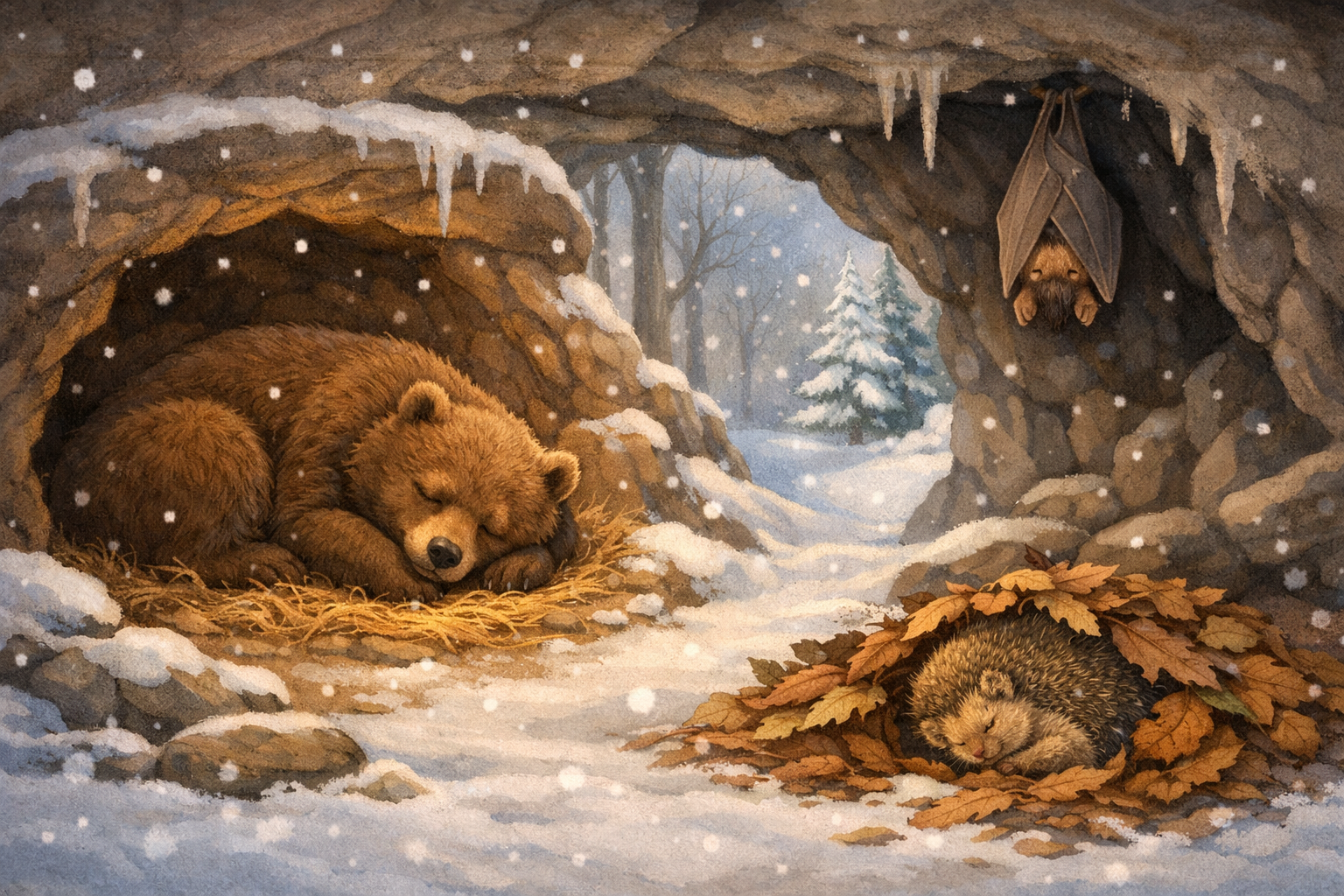
If your child has ever asked, "Where do the animals go in winter?" they’re noticing something important. When the weather turns cold and food becomes hard to find, many animals use a special survival strategy called hibernation. Understanding why animals hibernate helps kids see winter not as a scary time, but as a quiet season of rest and preparation.
At its heart, hibernation is about energy. Just like kids get tired without snacks, animals can’t stay active when their food disappears. Instead of struggling, some animals slow everything down until spring returns.
The big idea (for parents first)
Hibernation is a biological response to seasonal change. Animals that hibernate lower their heart rate, breathing, and body temperature to conserve energy when food is scarce. This isn’t sleep in the everyday sense—it’s more like pressing a long, careful pause button.
Kids don’t need all the biology at once. What they do need is a sense that animals are safe, prepared, and doing exactly what their bodies are meant to do.
A kid-friendly way to say it
The Script (parent-ready phrase):
"Some animals hibernate because winter is like a really long night with no snacks. Their bodies help them rest quietly so they don’t run out of energy before spring."
This simple framing answers the why without overwhelming details—and it reassures younger children who might worry about animals being cold or lonely.
What actually happens during hibernation
Children often imagine animals sleeping just like humans do, tucked in for months at a time. The reality is more fascinating—and still very kid-appropriate.
When animals hibernate:
- Their heartbeats slow way down
- Their breathing becomes very gentle
- Their body temperature drops (but not dangerously)
- They use stored body fat instead of eating
To a child, you might explain it like this:
The Analogy
Hibernation is like switching from running around all day to using battery-saving mode on a tablet. Everything still works—it just uses much less energy.
Not all animals hibernate the same way
One of the most common misunderstandings is that all animals hibernate, or that they all do it in the same way.
The Gentle Correction
Some animals hibernate very deeply, barely moving for weeks at a time. Others do something called torpor, which is like short naps during cold days.
You might say:
"Animals choose different rest plans, just like people do. Some take a long vacation, and some just rest more often."
Birds often migrate instead of hibernating. Deer stay active but grow thicker fur. Squirrels don’t fully hibernate—they nap and wake up to snack on food they stored.
This helps kids understand that nature uses many smart solutions, not just one.
Ages 3–5: What kids usually think
At this age, children may worry that animals are:
- Cold
- Hungry
- Lonely
- "Forgotten" under the snow
What helps
- Use reassuring language ("safe," "cozy," "their bodies know how")
- Avoid phrases like "almost dead" or "shut down"
- Emphasize warmth and protection
A simple check-in question:
"Do you think the animal is comfy or uncomfortable right now?"
Then gently guide them toward the idea of comfort.
Ages 6–8: Curiosity takes the lead
Kids in this range often ask:
- "How do they breathe?"
- "Do they dream?"
- "What if they wake up too early?"
The Adult Context (simplified)
Animals that hibernate have bodies designed for it. Their brains and hearts are protected, and they wake up slowly when conditions are right. It’s not random—it’s deeply biological.
You can say:
"Their bodies have a built-in calendar that helps them wake up when spring is ready."
Ages 9–12: Science and skepticism
Older kids may wonder:
- "Why don’t humans hibernate?"
- "Could animals stop hibernating if winters change?"
This is a great age to connect hibernation to broader ideas like climate, adaptation, and survival—without alarm.
The Real-World Tie-In
Talk about how animals respond to changes in weather and food, and how scientists study these patterns to learn about ecosystems.
A tiny micro-conversation
Child: "Is the bear bored the whole time?"
Adult: "That’s a good question. When bears hibernate, their brains are resting too. It doesn’t feel like waiting—it feels like deep rest."
Child: "So it’s not boring?"
Adult: "Nope. It’s exactly what their bodies want."
Short conversations like this build trust and curiosity at the same time.
Try this at home: the hibernation experiment
The Do
Invite your child to imagine their own "energy-saving mode":
- Ask them to run in place for 20 seconds.
- Then have them sit quietly and breathe slowly.
- Ask: "Which one uses more energy?"
Connect it back:
"Animals choose the quiet option when food is hard to find."
This physical experience makes the concept stick.
A common parent pitfall
It’s tempting to explain hibernation as animals being "lazy" or "sleeping all winter." While well-meaning, this can confuse kids later.
The Gentle Reframe
Hibernation isn’t laziness—it’s strategy. Animals aren’t avoiding life; they’re protecting it.
Why learning why animals hibernate matters
When children understand why animals hibernate, they learn something bigger than biology. They learn that rest can be wise, that different seasons need different strategies, and that nature plans ahead.
That’s a powerful message—for kids and adults alike.
As winter comes and goes, the question "why animals hibernate" opens the door to empathy, science, and respect for the rhythms of the natural world. And that’s a lesson worth curling up with.
Start explaining the world today
Join thousands of parents who use Little Answers to turn 'Why?' into a moment of connection.